Skip to content
Skip to product information
Description

Maple Burl is one of the most versatile and visually striking burl woods, valued for its brightness, tight figure, and ability to take dye and finish exceptionally well.

What Maple Burl Is

Maple burl forms on maple trees (Acer species) as an irregular growth caused by stress, injury, or disease. It is most commonly found on:

Bigleaf maple

Hard (sugar) maple

Red maple


Maple Burl is one of the most versatile and visually striking burl woods, valued for its brightness, tight figure, and ability to take dye and finish exceptionally well.


What Maple Burl Is


Maple burl forms on maple trees (Acer species) as an irregular growth caused by stress, injury, or disease. It is most commonly found on:

Bigleaf maple

Hard (sugar) maple

Red maple

Silver maple


Maple burls are found primarily in North America, especially the Pacific Northwest and the eastern United States.


Appearance & Grain


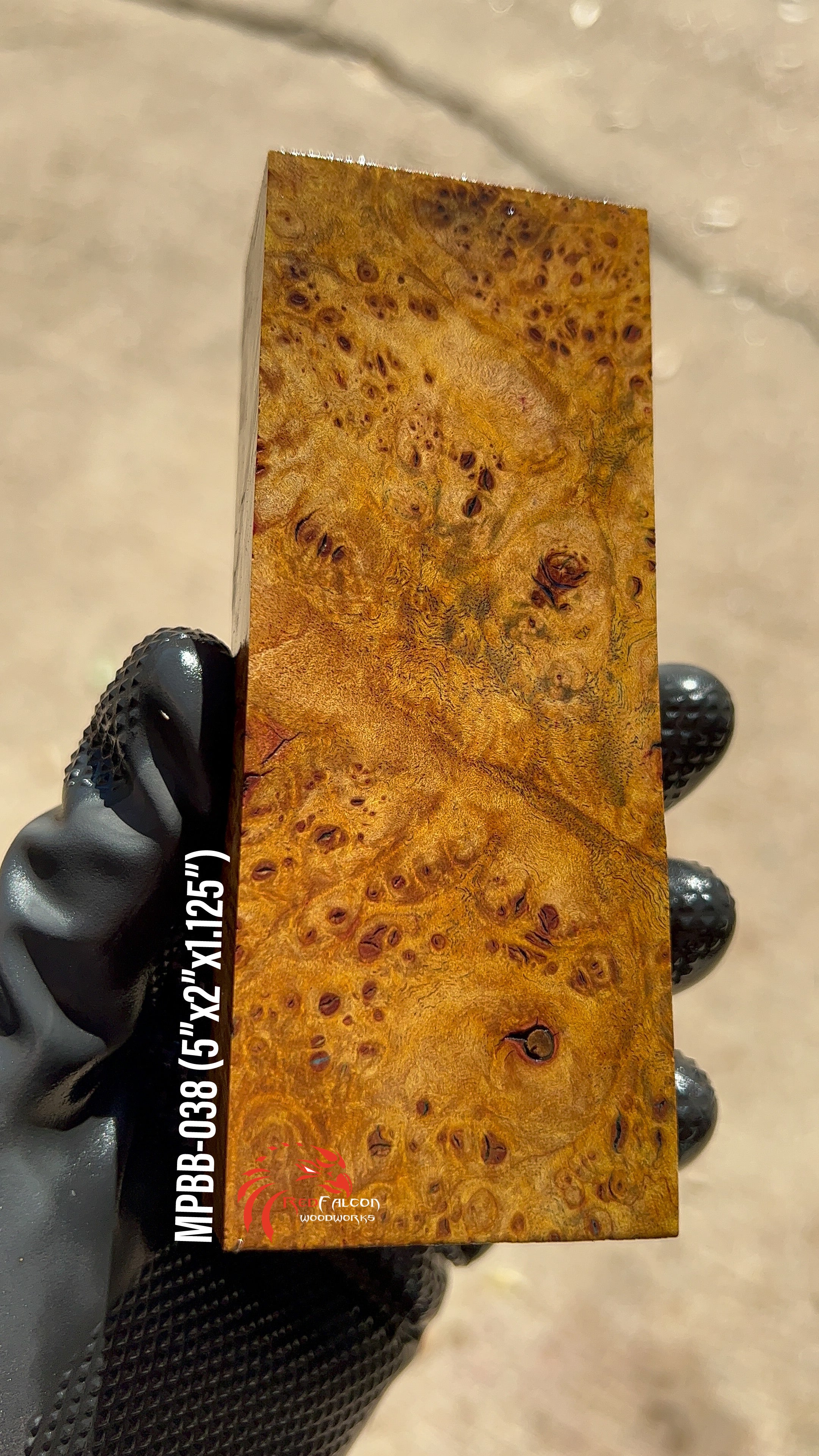
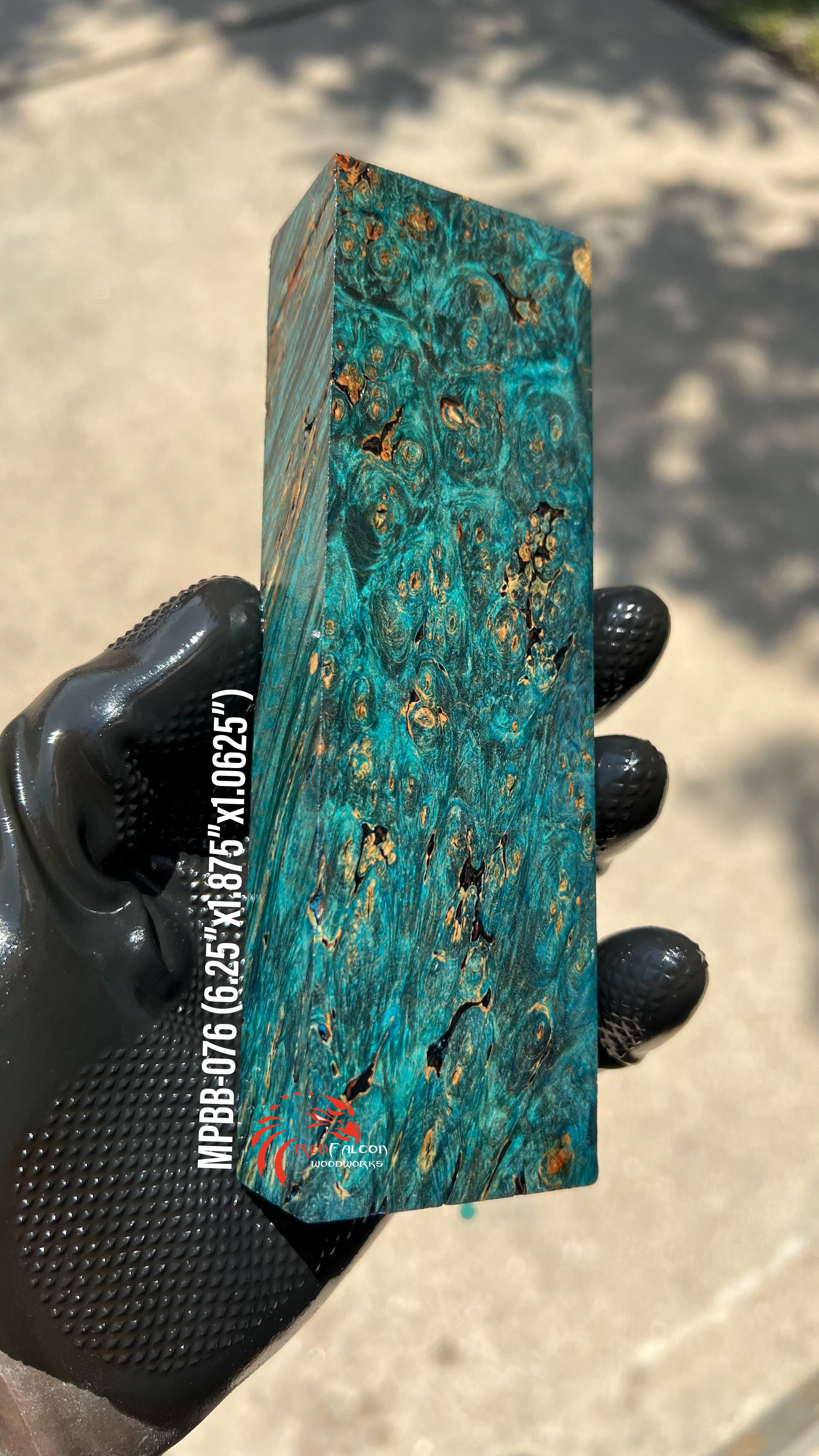
Maple burl is known for its dense eye structure and flowing, cloud-like grain patterns.


Visual characteristics:

Tight clusters of “eyes” mixed with swirls and feathering

Highly figured but often more uniform than exotic burls

Strong chatoyance (light-shifting depth)

Clean, refined look that highlights fine detail


Color range:

Creamy white

Pale blonde

Light tan

Soft amber

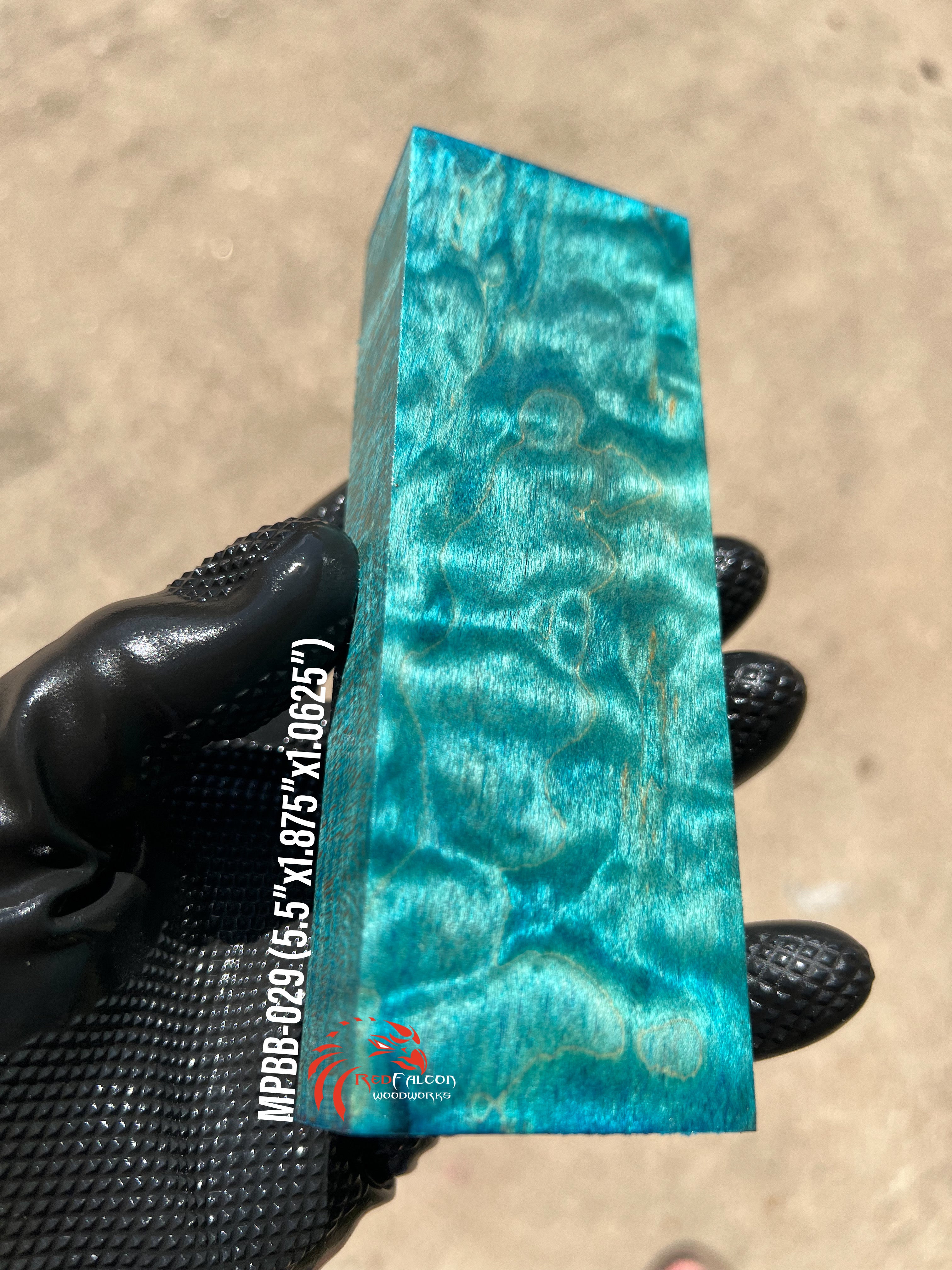
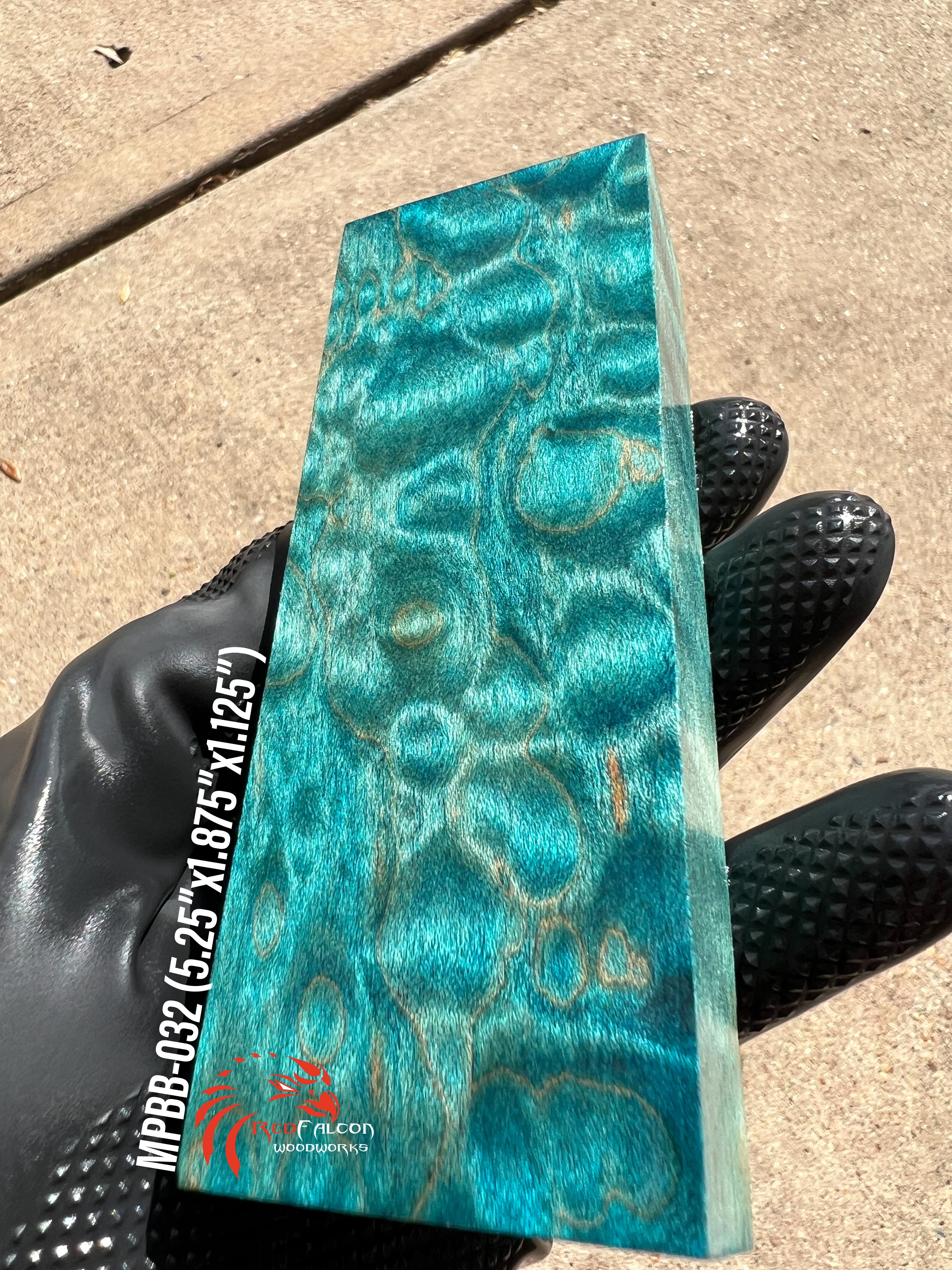
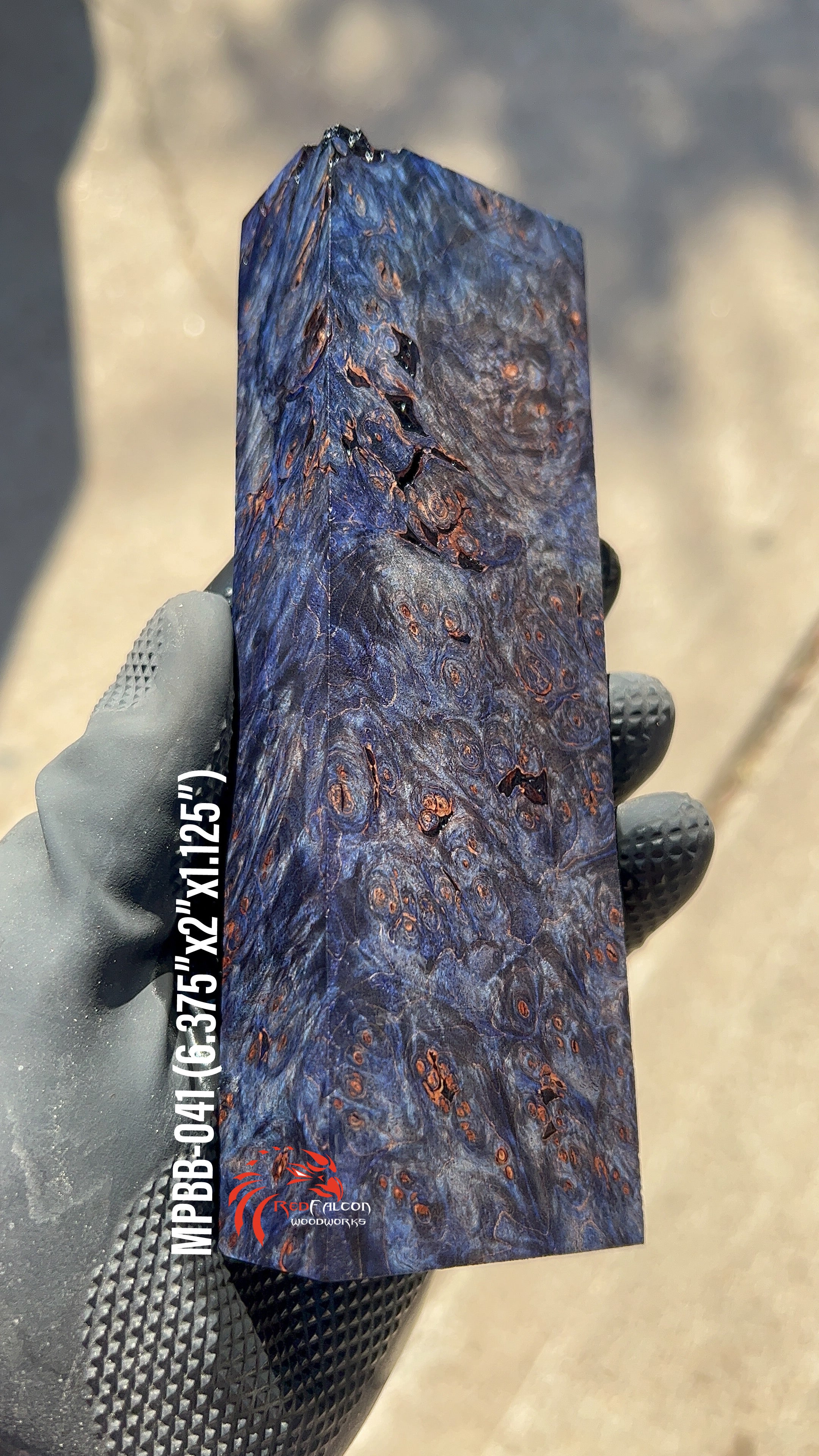
Maple burl readily accepts dyes, allowing for vivid blues, reds, greens, and stabilized color treatments.


Density & Working Properties

Medium to hard density (varies by maple species)

Fine, closed grain

Stable when properly dried or stabilized

Excellent machining and turning characteristics


Working notes:

Cuts cleanly with sharp tools

Sands smoothly with minimal tear-out

Takes glue, epoxy, and stabilization very well

Finishes to a high polish


Because of its lighter color and structure, maple burl is one of the best burls for stabilization and dye infusion.


Common Uses


Maple burl is extremely popular across many crafts:

Knife scales

Turned bowls and vessels

Pen blanks

Jewelry and inlay

Guitar tops and accents

Decorative boxes

Furniture panels and veneer


Its clean look makes it ideal for both natural finishes and bold dyed pieces.


Rarity & Value

Maple burls are more common than many exotic burls

High-grade burl with tight eyes and minimal voids is still highly desirable

Larger burls with consistent figure command premium prices

Veneer-quality maple burl is highly sought after

Maple Burl Scales MPBB-031 (Stabilized)

Regular price $49.99
Sold out

Tax included. Shipping calculated at checkout

Description

Maple Burl is one of the most versatile and visually striking burl woods, valued for its brightness, tight figure, and ability to take dye and finish exceptionally well.

What Maple Burl Is

Maple burl forms on maple trees (Acer species) as an irregular growth caused by stress, injury, or disease. It is most commonly found on:

Bigleaf maple

Hard (sugar) maple

Red maple


Maple Burl is one of the most versatile and visually striking burl woods, valued for its brightness, tight figure, and ability to take dye and finish exceptionally well.


What Maple Burl Is


Maple burl forms on maple trees (Acer species) as an irregular growth caused by stress, injury, or disease. It is most commonly found on:

Bigleaf maple

Hard (sugar) maple

Red maple

Silver maple


Maple burls are found primarily in North America, especially the Pacific Northwest and the eastern United States.


Appearance & Grain


Maple burl is known for its dense eye structure and flowing, cloud-like grain patterns.


Visual characteristics:

Tight clusters of “eyes” mixed with swirls and feathering

Highly figured but often more uniform than exotic burls

Strong chatoyance (light-shifting depth)

Clean, refined look that highlights fine detail


Color range:

Creamy white

Pale blonde

Light tan

Soft amber

Maple burl readily accepts dyes, allowing for vivid blues, reds, greens, and stabilized color treatments.


Density & Working Properties

Medium to hard density (varies by maple species)

Fine, closed grain

Stable when properly dried or stabilized

Excellent machining and turning characteristics


Working notes:

Cuts cleanly with sharp tools

Sands smoothly with minimal tear-out

Takes glue, epoxy, and stabilization very well

Finishes to a high polish


Because of its lighter color and structure, maple burl is one of the best burls for stabilization and dye infusion.


Common Uses


Maple burl is extremely popular across many crafts:

Knife scales

Turned bowls and vessels

Pen blanks

Jewelry and inlay

Guitar tops and accents

Decorative boxes

Furniture panels and veneer


Its clean look makes it ideal for both natural finishes and bold dyed pieces.


Rarity & Value

Maple burls are more common than many exotic burls

High-grade burl with tight eyes and minimal voids is still highly desirable

Larger burls with consistent figure command premium prices

Veneer-quality maple burl is highly sought after

Heading
There is currently no content in this section. Use the sidebar to add material to this section.
Maple Burl Scales MPBB-031 (Stabilized)
Drawer Title
Coupon
Similar Products